

What are Tags?
Tags are labels you can add to your Canvas executions to organize them. For example, if you have a Canvas that analyzes documents, you might want to label each execution with:- The type of document analyzed
- The analysis status
- The content category
How Dynamic Tags Work
Dynamic tags use the special variable$output to access values from the AI response. When the execution completes, the system automatically replaces the variable with the actual value.
Practical Example
Imagine your Canvas analyzes support tickets and returns the following response:sector-$output.categorypriority-$output.priority
sector-billingpriority-high
Configuring Tags in Canvas
Step 1: Access Canvas Settings
In the Canvas editing screen, locate the Custom Tags section in the settings.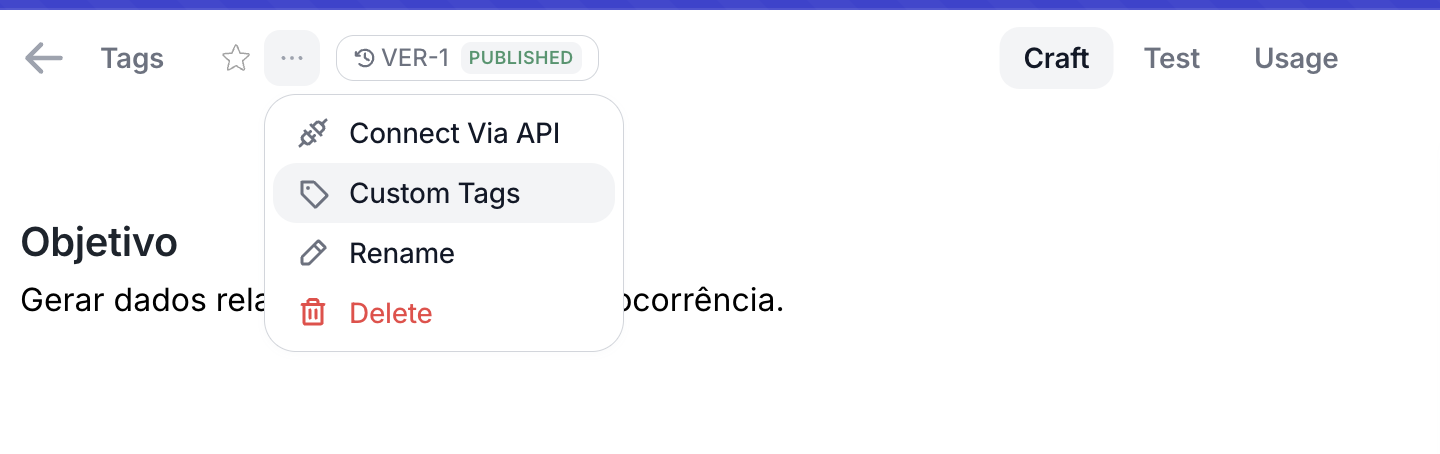
Step 2: Add Your Tags
You can add two types of tags: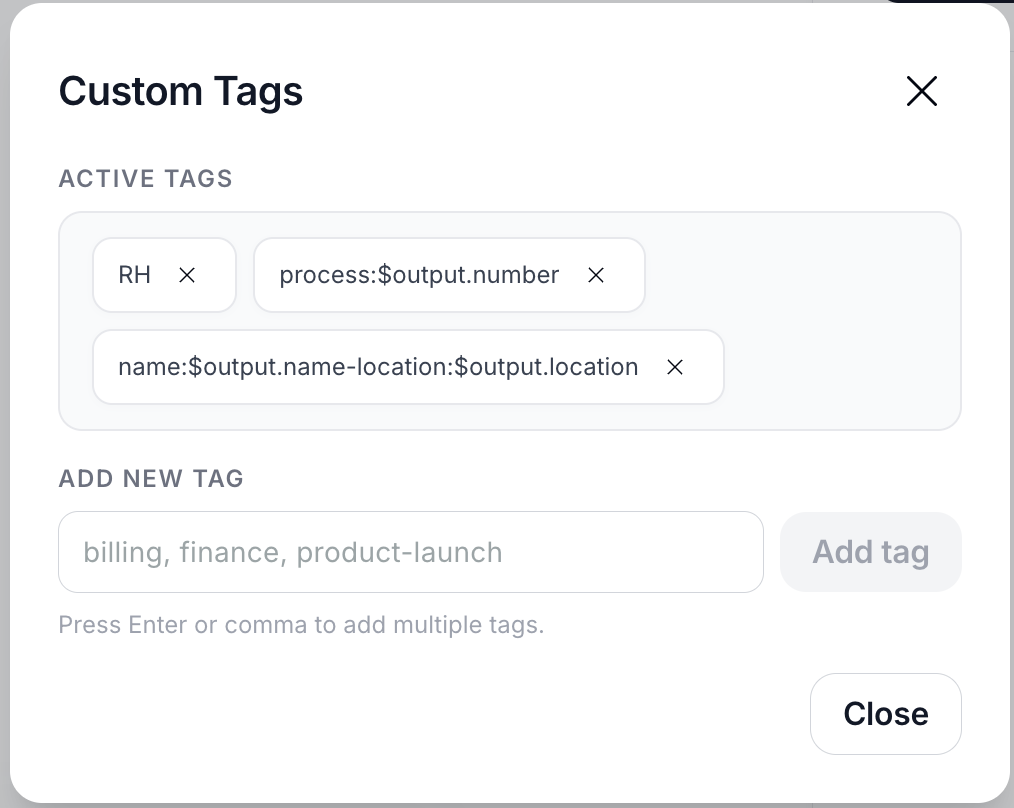
Step 3: Save the Canvas
Tags will be automatically applied to all future executions.Dynamic Tag Syntax
Basic Format
field is the name of the value you want to extract from the response.
Accessing Nested Values
If the response has a more complex structure, use dots to navigate:Accessing List Items
To access a specific item from a list, use brackets with the position number (starting at 0):Combining with Fixed Text
You can combine fixed text with dynamic values:Sending Tags via API
In addition to tags configured in the Canvas, you can also send additional tags directly through the API call. These tags will be merged with the Canvas tags.Request Example
How Merging Works
If the same tag appears in both Canvas and API, it will be registered only once (no duplication).
Viewing Tags in Usage
All tags (static and already processed dynamic ones) are registered in the Canvas Usage section.Where to Find
- Access the desired Canvas
- Go to the Usage or Execution History tab
- Each execution will show its associated tags
Filtering by Tags
You can filter executions by specific tags to:- Analyze usage by category
- Identify behavior patterns
- Generate segmented reports
- Monitor specific types of requests
Common Use Cases
Customer Support Classification
Customer Support Classification
Scenario: Canvas that analyzes customer messagesConfigured tags:
support(static)sentiment-$output.sentimentsubject-$output.subject
Document Processing
Document Processing
Scenario: Canvas that analyzes contractsConfigured tags:
document(static)type-$output.contract_typevalue-$output.value_rangerisk-$output.risk_level
Lead Analysis
Lead Analysis
Scenario: Canvas that qualifies leadsConfigured tags:
lead(static)score-$output.qualificationorigin-$output.channelproduct-$output.interest
Best Practices
Do
- Use descriptive and standardized tag names
- Combine static tags for fixed context with dynamic tags for variable data
- Configure your Canvas Output Format to return the fields you want to use as tags
- Test tags in development environment before going to production
Don't
- Create very long tags (256 character limit)
- Use spaces in tag names (use hyphen or underscore)
- Depend on fields that may not exist in the response (the tag will be ignored if the field doesn’t exist)
- Create too many different tags that make organization difficult
Special Case Behavior
Frequently Asked Questions
Summary
Tags are a tool to transform AI response data into organized and searchable information, facilitating the monitoring and analysis of your Canvas usage.